

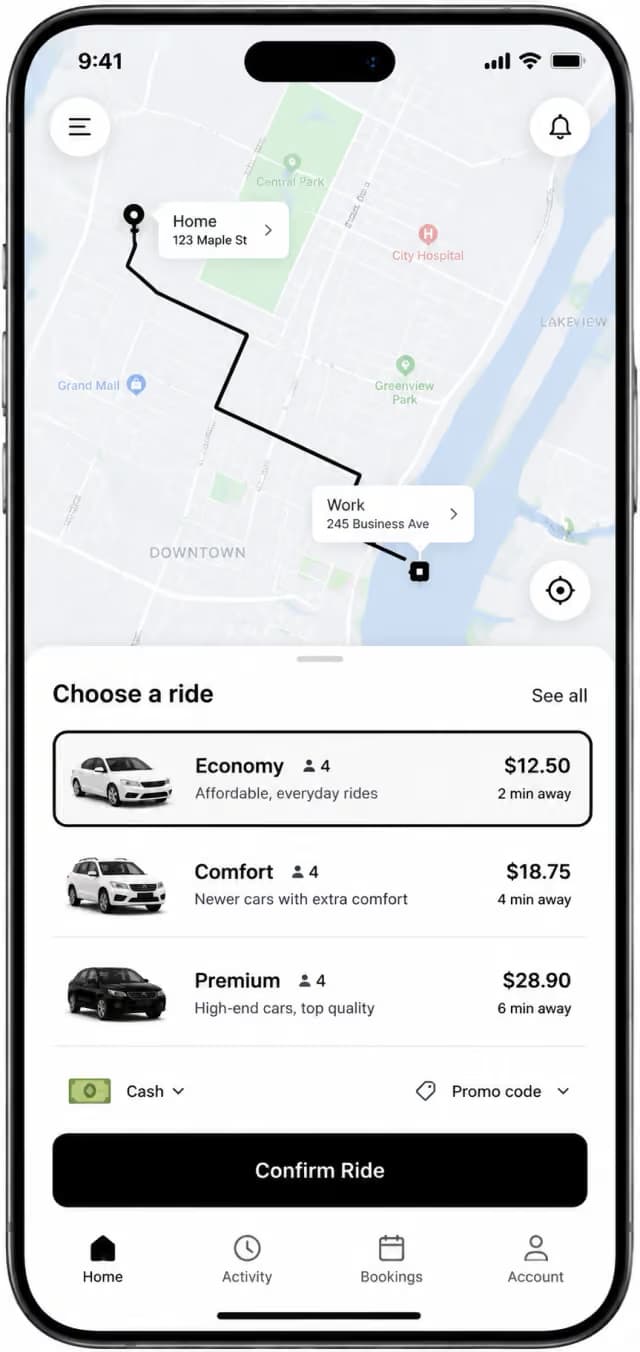
A modern ride-hailing app has to keep three experiences connected: the passenger request, the driver's operational view and the operator's control panel. Features should reduce uncertainty at each step rather than simply add more screens.
1. Passenger booking essentials
Passengers need a clear route from opening the app to confirming a ride. Pickup and destination selection should support map interaction and address search, while ride categories should explain capacity and expected vehicle type without forcing a comparison from memory.
- Account registration and profile management
- Live map, pickup search and destination entry
- Fare estimates and ride-category selection
- Payment method selection and receipts
- Trip status, cancellation and support tools
Need a rider app, driver app and admin panel for your business?
Explore the UberClones ride-hailing platform and discuss the modules, branding and workflows required for your market.
Book a live product demo →2. Real-time trip information
The passenger should always know whether a request is searching, assigned, approaching or completed. A consistent status language prevents repeated support requests and makes the app understandable across short and long journeys.
Key insightThe most important app feature is often not an extra option. It is accurate, timely information about what happens next.
3. Driver application features
The driver app must make availability, bookings, navigation, pickup details and trip completion easy to complete safely. Earnings and documents should be visible, but secondary information should not compete with an active trip.
- Availability and service-area controls
- Request details and accept or reject actions
- Turn-by-turn trip navigation
- Pickup, arrival and trip-state controls
- Earnings, history and account notifications
4. Admin and dispatch oversight
The operations team needs a live view of customers, drivers, vehicles, bookings and service issues. A dispatcher can assign or intervene when a booking cannot progress automatically, but every manual change should leave a clear record.
5. Features to add after validation
Advanced options such as corporate accounts, scheduled rides, multiple stops, promotions or fleet-level reports should be prioritised only after the core passenger and driver journey performs reliably. Each additional workflow creates support and testing requirements.
Planning checklist
- Define the minimum booking journey
- Confirm required roles and permissions
- Verify status transitions for every trip
- Test payment, cancellation and support flows
- Review the feature plan with operations staff