Effortless booking
Riders enter pickup and drop-off, compare ride categories and book now or schedule a trip for later in a few taps.
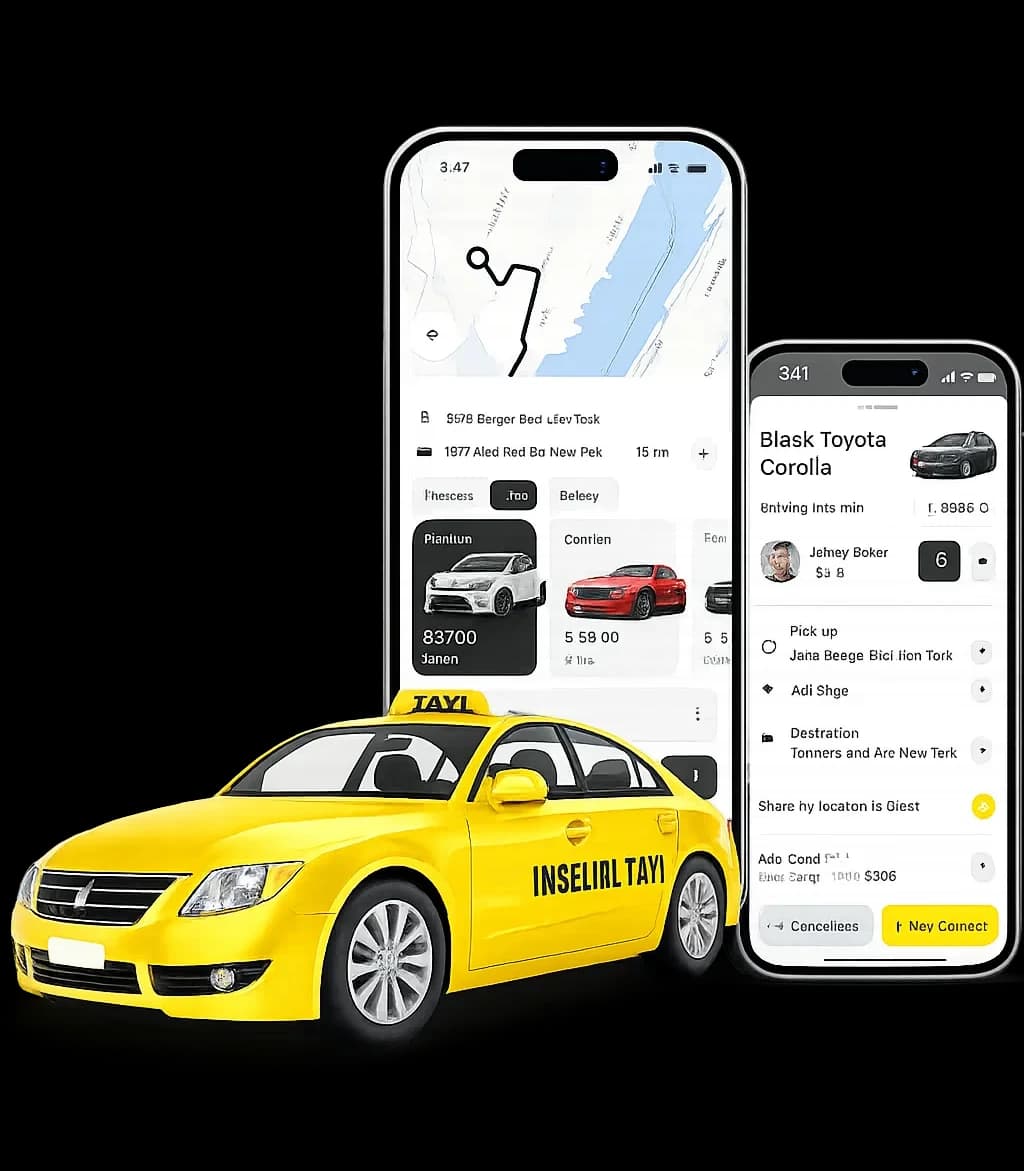
Uber Clone App is a complete ride-hailing system that connects passengers and drivers in real time. It allows users to book rides instantly by entering their pickup and drop location, while the system automatically finds and assigns the nearest available driver. This ensures faster response time, reduced waiting, and a smooth travel experience for users.
Once a ride is booked, the app enables live GPS tracking from pickup to drop, allowing both passengers and drivers to stay connected throughout the journey. The system also handles fare calculation automatically and ensures secure payment processing through multiple payment options. Overall, it simplifies the entire transportation process by making ride booking, driver allocation, and trip management fully automated and efficient.
Starting from a developed product removes the longest and riskiest part of a ride-hailing launch. Instead of spending months inventing booking flows, live tracking and payments, you begin with a working rider app, driver app and admin panel — then configure branding, fares and service areas for your market. The comparison below shows three common routes: white label, a custom Uber-like build, and building from scratch. Use it to see how budget, timeline and product risk typically differ before you commit. Launch times are typical ranges; your exact price and timeline are confirmed in a scoping call after you review the live product.
| Factor | White label Uber cloneRecommended | Custom Uber-like app | Build from scratch |
|---|---|---|---|
| Typical budget | $3,000 to $25,000+ | Quoted by scope | Quoted by scope, usually the highest |
| Time to launch | Weeks | 3 to 6 months | 6 to 12 months |
| Product risk | Low workflows already tested | Medium | High every module is new |
| Branding and rules | Configured to your business | Fully tailored | Fully tailored |
| Best for | Startups, taxi operators, local fleets | Operators with unusual workflows | Well-funded platform builders |
These are screens from the working product, not concept art. The rider app, driver app and admin panel share one backend, so a booking made on a phone appears on the dispatcher screen instantly.
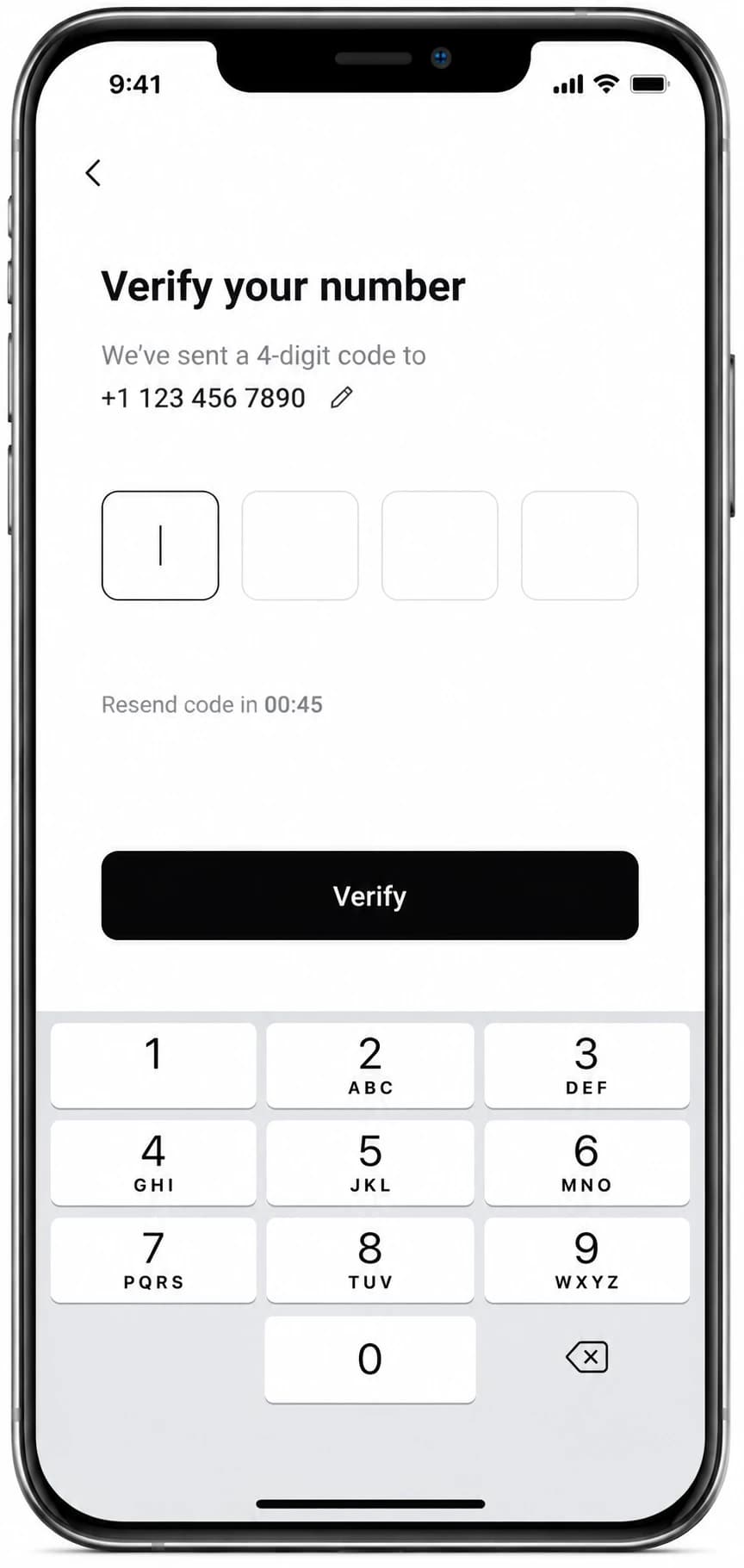
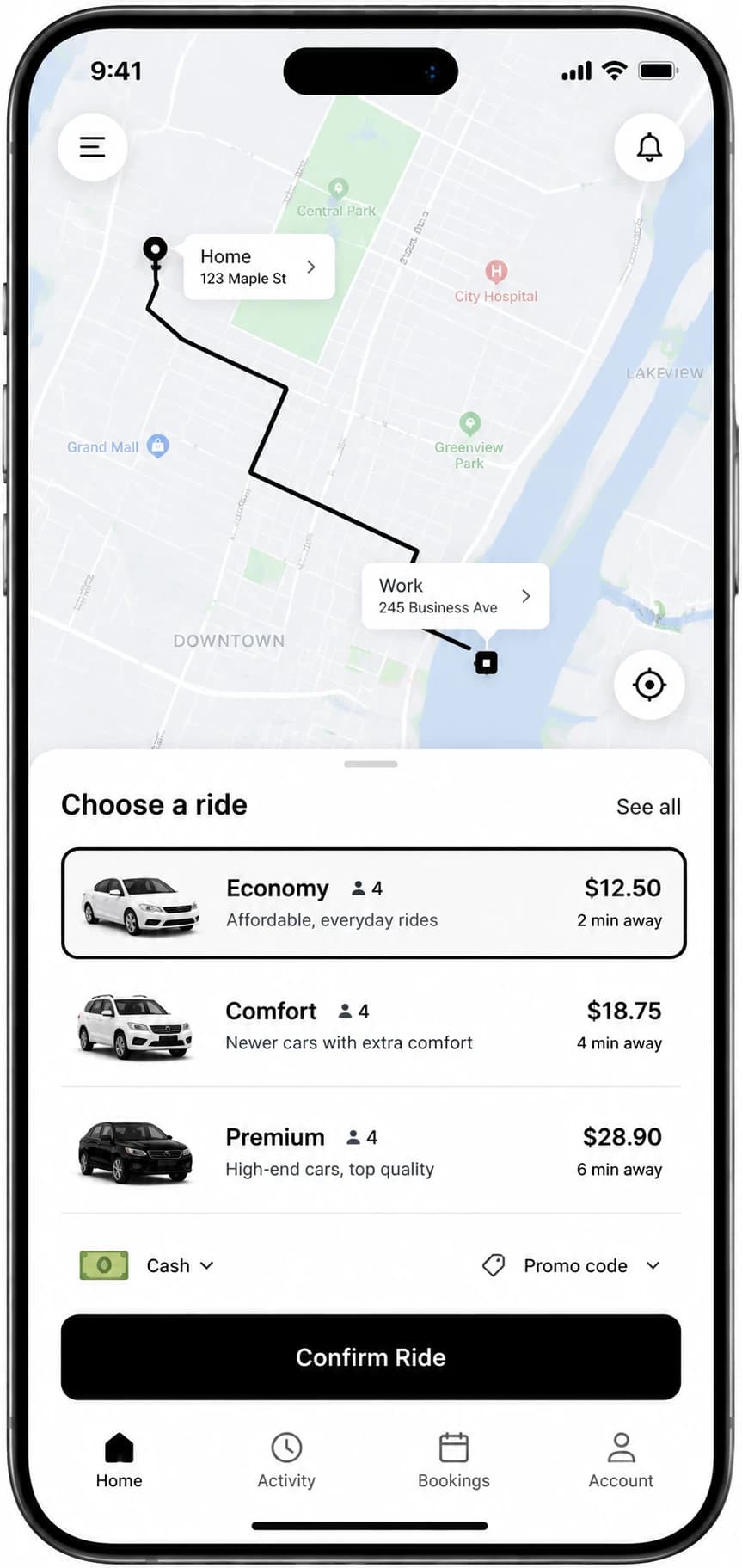
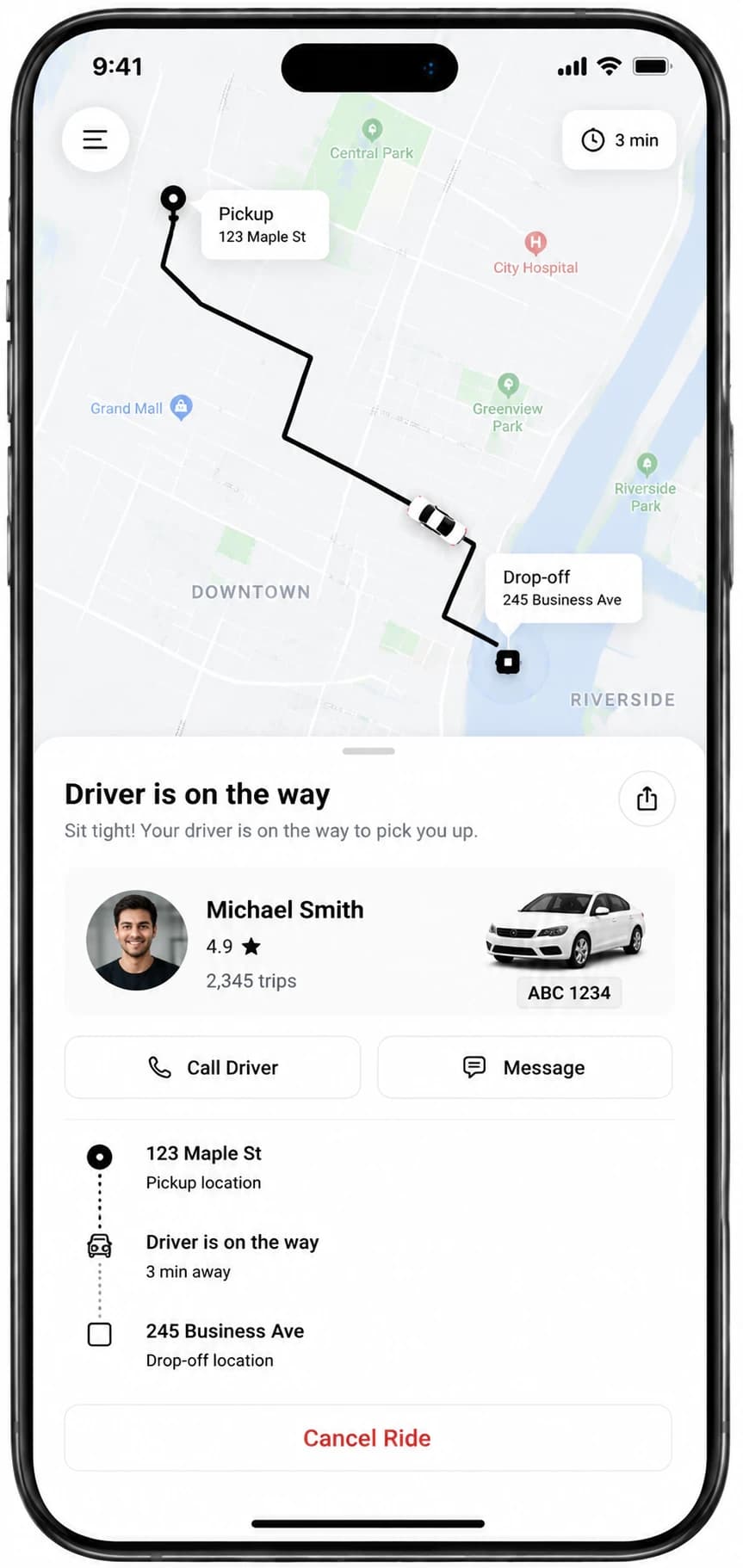
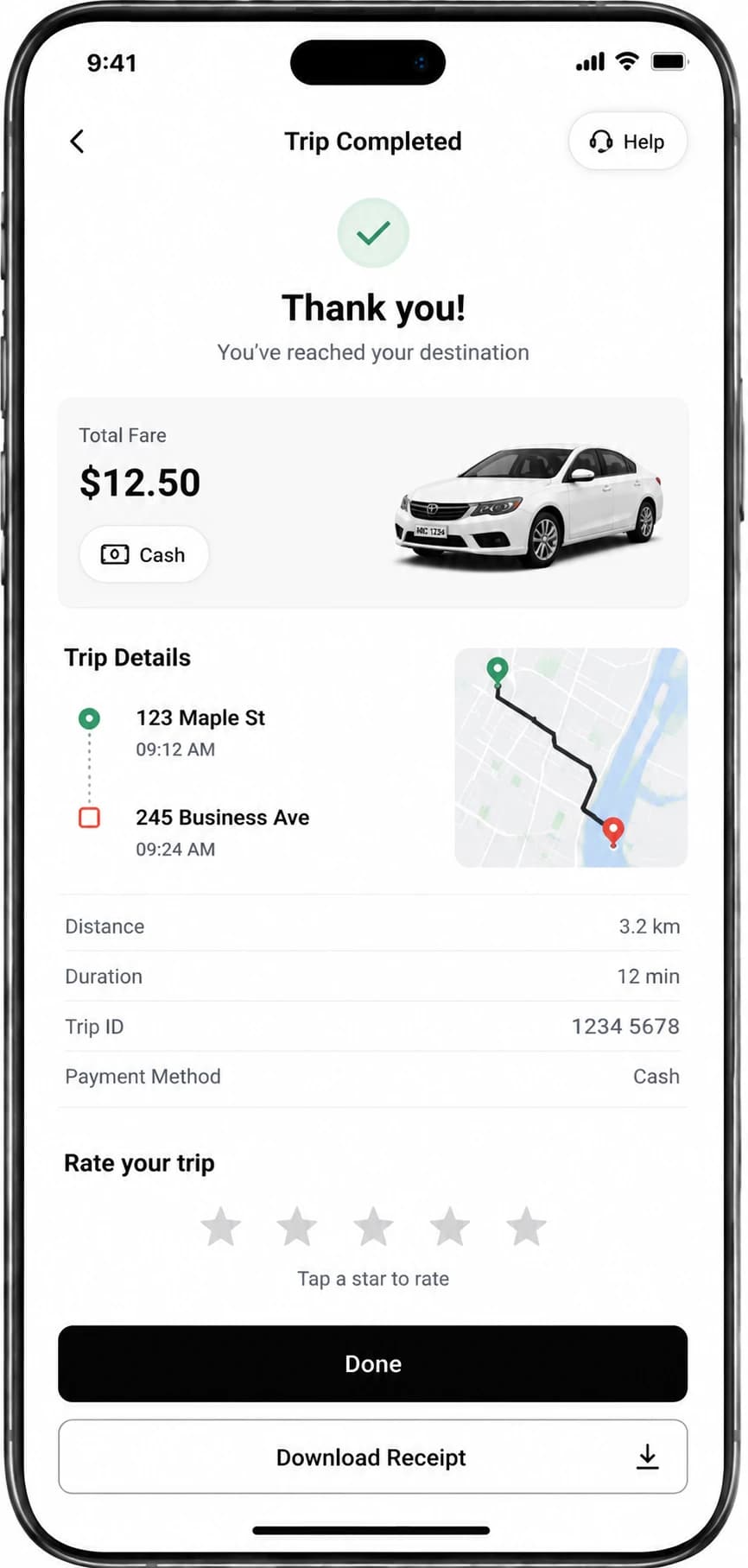
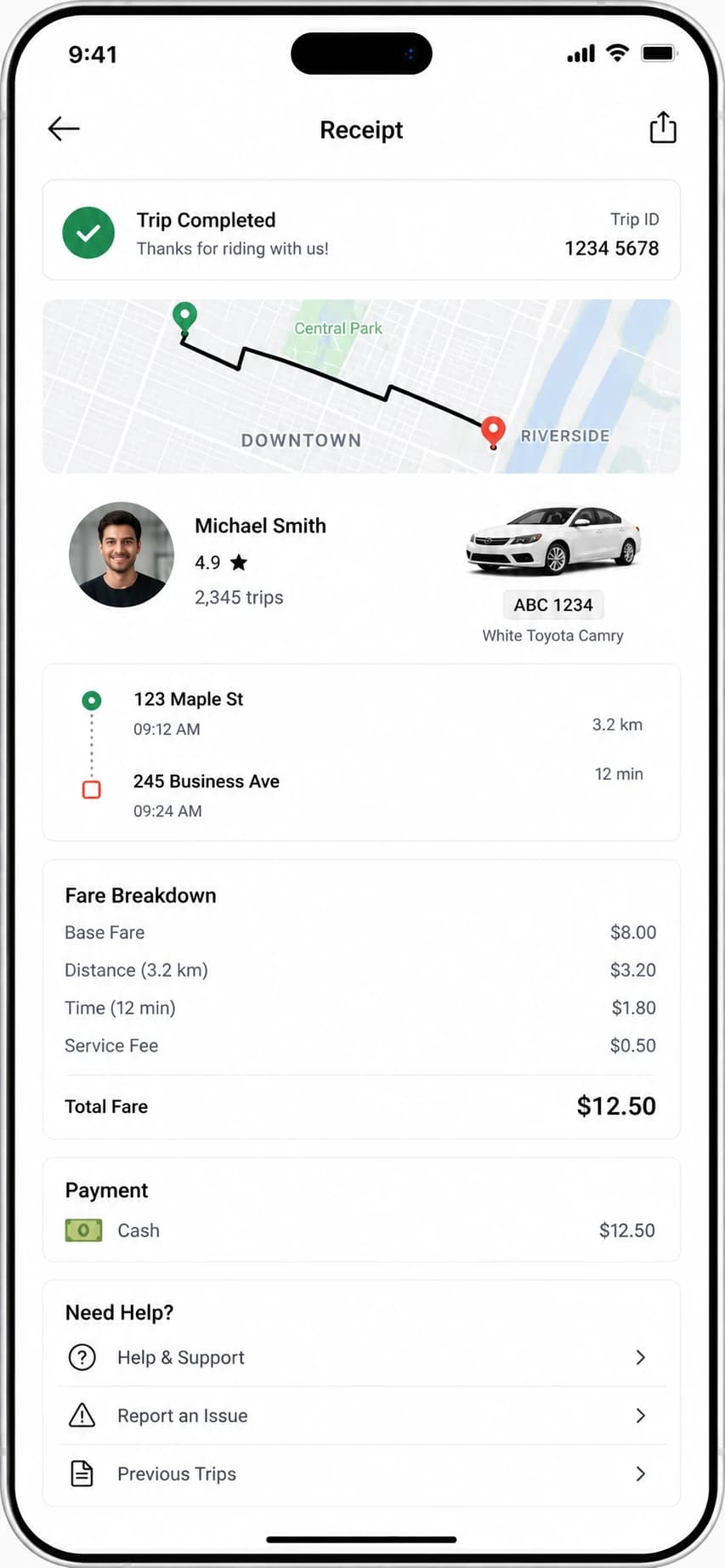
A ride-hailing business serves three audiences at once. Switch between User, Driver and Admin to see what each app includes — booking, tracking, payments, safety tools and operations — then pick the modules that match your launch.
Riders enter pickup and drop-off, compare ride categories and book now or schedule a trip for later in a few taps.
Live driver location and a running ETA show riders exactly when the car will arrive and where it is on the route.
Cash, cards and an in-app wallet, with itemised receipts and a full ride history for every trip.
An SOS button and trip sharing let riders alert contacts, and driver details are visible before the ride starts.
Two-way ratings after each trip build trust and help you keep service quality high.
Home, work and favourite addresses, plus promo codes and referrals, bring riders back faster.
Drivers register, upload documents and wait for admin approval, all from the app.
New requests arrive with pickup details and a countdown, so drivers can accept or decline quickly.
Turn-by-turn directions guide drivers to the pickup point and the destination without switching apps.
Daily earnings, commission deductions and payout history stay visible in one place.
Completed trips, rider feedback and performance numbers help drivers track their progress.
An online and offline switch and schedule settings let drivers decide when they work.
Review profiles, approve driver documents and manage vehicles from one dashboard.
Watch active rides and assign or reassign drivers manually when a booking needs attention.
Set base fares, per-distance rates, commission and promo codes without a new app release.
Track transactions, process refunds and manage driver payouts with a clear audit trail.
Revenue, trip volume and driver performance reports show how the business is doing.
Configure service areas, currencies, languages and notifications for each market.
Once the core is live, these modules improve safety, revenue and driver supply. Availability depends on your package, so confirm the exact list during the demo.
Adjust fares during configured peak periods to balance demand and driver supply.
Let drivers offer a price and let riders compare offers before choosing.
Route each request to eligible nearby drivers using distance, rating and availability rules.
See where requests cluster so you can place incentives and recruit drivers where they pay off.
Allow riders to add stops on one trip for errands and shared journeys.
SOS alerts, trip sharing and driver verification workflows for rider confidence.
Show balances, commission deductions and payout history inside the driver app.
Serve different regions from one platform with local currency and translated interfaces.
The same dispatch, tracking and payment engine can run many service models. Choose one to start and add others as you grow.
Five steps connect the rider, the driver and your operations team. Each step is visible in the admin panel, so nothing in a live trip is a black box.
The rider enters pickup and destination, sees the fare and confirms a ride type.
The system finds eligible nearby drivers and sends the request, or a dispatcher assigns one manually.
A driver accepts. The rider sees driver, vehicle and arrival time.
Location updates run live for rider, driver and admin until drop-off.
Payment is recorded, commission is calculated and both sides leave ratings.
Most operators combine several revenue streams. Choose the mix that fits your market and driver relationships, then adjust the rules in the admin panel without a new app release.
A configured percentage of every completed booking. This is the core model for most marketplaces.
Weekly or monthly plans that give drivers or fleet partners access with lower or no commission.
Higher fares during rush hour, events and bad weather to draw more drivers onto the road.
Fees that compensate drivers for lost time and discourage no-shows.
Managed ride programmes for businesses, with invoicing and usage reports.
Higher-value vehicle classes, airport transfers and in-app promotions.
Uber clone app development at UberClones.com costs from $3,000 to $25,000+, depending on the modules, platforms and customisation you choose. The range is wide because cost follows scope, not the label “Uber clone”.
Your final price is confirmed in a scoped quote after the product demo.
A ride-hailing platform depends on real-time location, reliable payments and a backend that can handle many simultaneous trips. Final choices are confirmed during technical scoping.
A structured path from product review to launch keeps scope, cost and timeline agreed before work begins.
Review rider, driver and admin journeys and map them to your business.
Agree logo, colours, ride categories, pricing rules and service areas.
Connect the maps, payment, SMS and notification services for your market.
Test booking, dispatch, trip completion, payment and user management.
Prepare production servers and app store submission materials.
Go live to the agreed scope, then plan maintenance and new modules.
Software is only one part of a ride-hailing business. In the United States, transportation network and taxi rules are set by states and cities, so requirements differ widely.
This is general information, not legal advice. Speak with a local transport attorney before launch.
Tell us your city, service model and timeline. We will walk you through the built product and outline a suitable scope.
Review real rider, driver and admin screens before committing to a scope.
Rider, driver, dispatcher, fleet and admin tools share one platform.
Align booking, pricing and operations with how your business actually runs.
Define payment, mapping and messaging services for your market up front.
Reach riders and drivers on the devices they already use.
Plan deployment, maintenance and future features with a clear scope.
Cost, launch time, panels, branding and Uber for X — answers before you book a demo.
An Uber clone app is ready-made ride-hailing software that connects a rider app, a driver app and an admin panel so a business can run its own branded taxi booking service.
Uber clone app development at UberClones.com costs from $3,000 to $25,000+. The final price depends on the modules, platforms, integrations and customisation you choose.
A white label product can be configured and launched in weeks, while a custom build usually takes several months. Timelines depend on customisation, third-party integrations, testing and app store review.
The core product includes passenger, driver and admin interfaces. Dispatcher, fleet management and customer support panels are available as part of the wider platform.
Yes. The booking, dispatch, tracking and payment engine can be configured for taxi, courier, food, grocery, medicine, home services and other on-demand models.
Yes. Logo, colours, ride categories, languages and supported interface changes can be configured. Agree the final branding scope before implementation.