

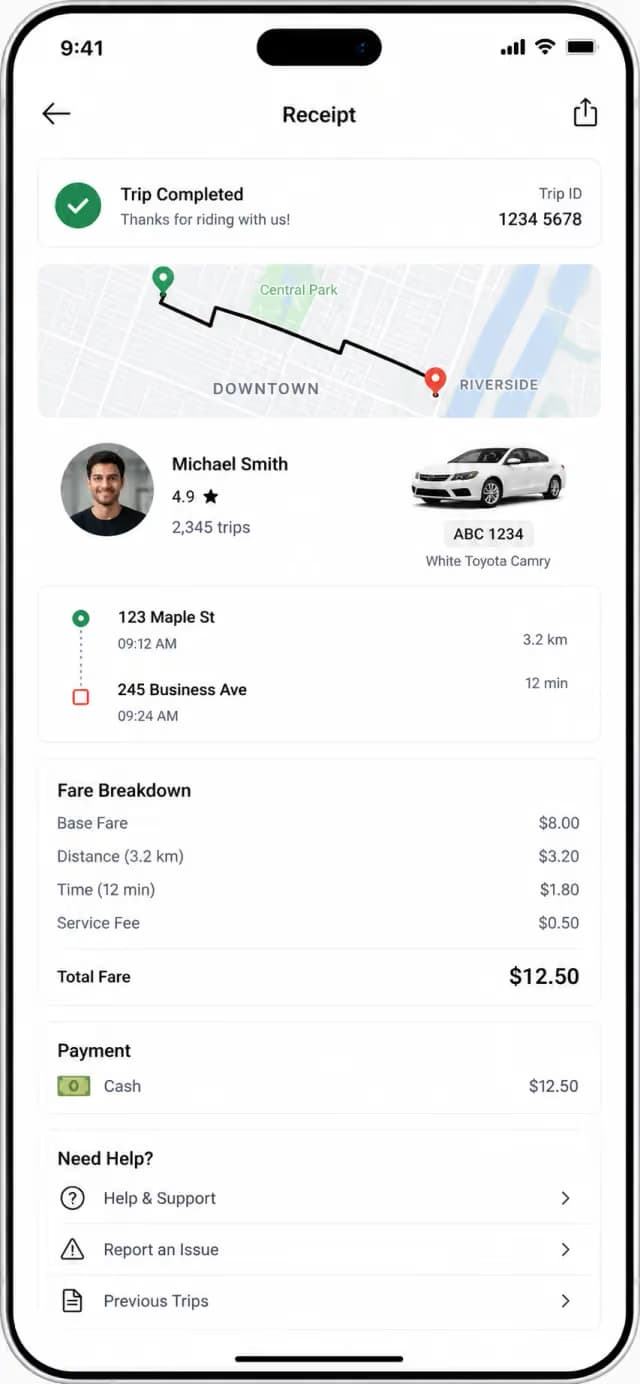
GPS tracking is the bridge between a driver's physical movement and the digital ride-hailing record. It combines device location, mapping data, server events and the current trip state to keep riders and operators informed.
1. The rider creates a location context
The rider selects a pickup point and destination, often with map search and address suggestions. The platform should preserve a clear display address and coordinates for the same place because navigation data may differ from the text entered by the customer.
2. The platform tracks trip state
Need a rider app, driver app and admin panel for your business?
Explore the UberClones ride-hailing platform and discuss the modules, branding and workflows required for your market.
Book a live product demo →A booking changes through search, assignment, approaching, arrival, in-progress and completed states. Location updates confirm movement, but business events determine the trip status. The system should not infer that a trip started solely because the driver's coordinates changed.
- Ride request is created
- Eligible drivers receive the booking
- A driver accepts and becomes assigned
- Pickup arrival is confirmed
- Trip starts and completes with recorded events
3. Location updates during the journey
The driver app sends periodic location samples to the server. The frequency should balance real-time visibility with battery use and network cost. The passenger app should display the latest valid position instead of assuming every sample is exact.
4. Route and map information
A mapping provider supplies routing, estimated travel time and map tiles. Road closures and turn restrictions can affect the suggested route. The system should distinguish between live position, the displayed route and the final trip-distance calculation.
5. Handle weak signals and permission changes
GPS accuracy may decrease near tall buildings, indoors or in poor network conditions. A reliable app validates the latest location, provides clear status when tracking is unavailable and gives the driver a recovery step instead of repeatedly sending unreliable updates.
Privacy and retention
Request the minimum location access required for the role and explain why it is needed. Use strong access controls, define retention periods and avoid exposing exact historical locations to users who do not require them for operations or support.
Key insightReliable tracking means combining accurate location data with clear trip events, useful map context and transparent privacy controls.